The Referral Beyond the Surgery: What Social Prescribing Really Delivers, and Where It Falls Short
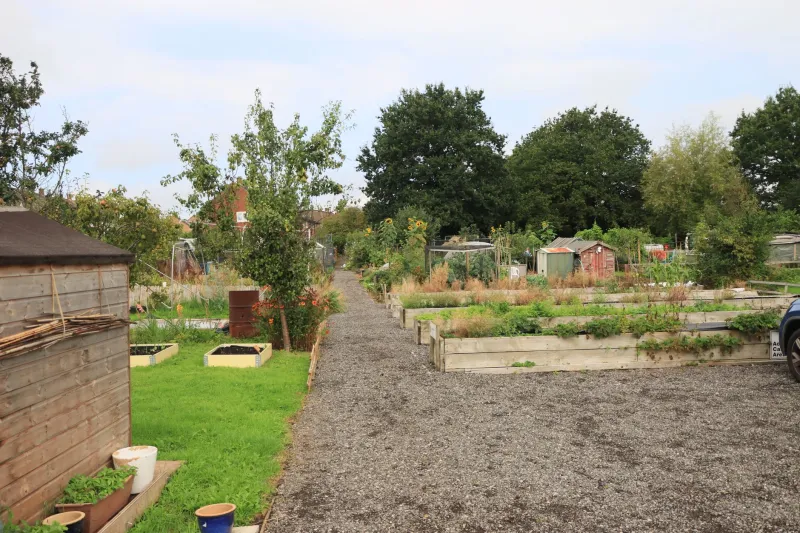
The consultation lasts twelve minutes. You came about your knees and your sleep, and you leave with a phone number for a link worker and the address of a community garden that opens on Tuesday mornings. Nothing has been prescribed in the pharmaceutical sense. Something has been offered instead.
Social prescribing has moved from the margins of English general practice to something close to standard equipment. The NHS Long Term Plan committed to funding link workers across primary care networks, and there are now several thousand in post. Scotland, Wales and Northern Ireland run their own variants. The principle is simple: some of what brings people to a GP surgery is not clinical, and a non-clinical response may serve better than a prescription.
What the offer actually consists of
A link worker — sometimes called a social prescribing coordinator or community navigator — takes a referral, usually from a GP, nurse or other primary care staff member, and increasingly by self-referral. They spend time on what matters to the person rather than what is the matter with them, then connect them to something in the community: a gardening project, a walking group, an arts on prescription scheme, a singing circle, a Men's Shed, befriending, money advice, employment support, English classes, a food project.
The referral may arrive through the NHS App, an online community directory or a printed list depending on the practice. That digital front door is uneven. Where directories are well maintained they save time; where they are not, they send people to groups that closed two years ago.
Inside a link worker's caseload
Priya Raman has worked as a link worker in a primary care network in Greater Manchester since 2021. Her caseload sits between 150 and 250 people at any time, and appointments run to around half an hour.
“The referral is the easy part,” she says. “The follow-up is where the work is. Did they get there? Did they speak to anyone? Would they go back? If I don't ask those questions, I've just handed someone a leaflet.”
Her matching method is more practical than clinical. “I ask what they would do with a free Tuesday morning and no money. That answer is often closer to the truth than the reason on the referral form.”
She is also candid about failure. “If a group doesn't stick, that's information, not a verdict. We try something else. The thing I won't do is pretend I'm offering therapy. I'm not, and people deserve to know that up front.”
What the evidence does and does not show
Social prescribing is popular, and popularity is not the same as proof. Systematic reviews generally report small to moderate improvements in wellbeing, mental health and health-related quality of life, alongside weaker evidence on harder endpoints such as hospital admissions or blood sugar control. Much of the literature carries a high risk of bias, relies on before-and-after designs, and struggles to separate the effect of the activity from the effect of being listened to by someone for half an hour.
Qualitative research is more consistent. People describe the value of continuity, of a named person, of being taken seriously when the clinical options have run out. NHS England's own referral data shows rising volumes alongside a notable proportion of people who do not attend a first appointment — a reminder that a referral is an offer, not a treatment, and that offers get declined for reasons that are usually practical.
Why your postcode changes the offer
Provision varies enormously. The number of link workers per head of population differs between networks. Some areas allow self-referral; others require a clinician. Rural areas may have excellent walking groups and no bus to reach them. The most deprived areas often combine the highest levels of need with the thinnest voluntary sector infrastructure, which is the opposite of what the model assumes.
Some networks restrict referrals by age, condition or postcode. Others have waiting lists for the link worker themselves. All of this means that two people with identical circumstances can receive very different offers depending on where they live — a variation that is difficult to defend and rarely explained to patients.
Getting more out of a referral
A few practical points make a measurable difference.
Be specific about what you can sustain. A Tuesday morning group is no use if you care for a parent on Tuesdays. Say so at the first meeting rather than after three missed sessions.
Name the barriers. Transport, cost, hearing loss, anxiety about walking into a room of strangers, mobility, the weather. Link workers can often solve problems that patients assume are disqualifying.
Ask for two or three options rather than one. Choice improves the odds that something fits.
Ask about the group itself: how many people attend, whether it is drop-in, whether someone will meet you at the door, whether there is a charge for materials or tea.
Ask what happens if it does not suit. Can you be re-referred, or switched to something else without going back to the GP?
Ask when the follow-up will be. A link worker who checks in after a fortnight is worth more than a leaflet.
Finally, give it two or three visits. First sessions are rarely representative of anything.
The limits, stated plainly
Social prescribing is not a substitute for treatment. If your mood is deteriorating, or you are having thoughts of harming yourself, tell your GP rather than waiting for the gardening to take effect. Link workers are not clinicians and cannot assess risk or advise on medication. And a referral should never be used to delay an assessment that is clinically needed.
What it can do, at its best, is modest and real: put a person in a room with other people, at a fixed time, doing something with a purpose. In a country where loneliness is increasingly treated as a public health matter, that is not a small thing.